Place
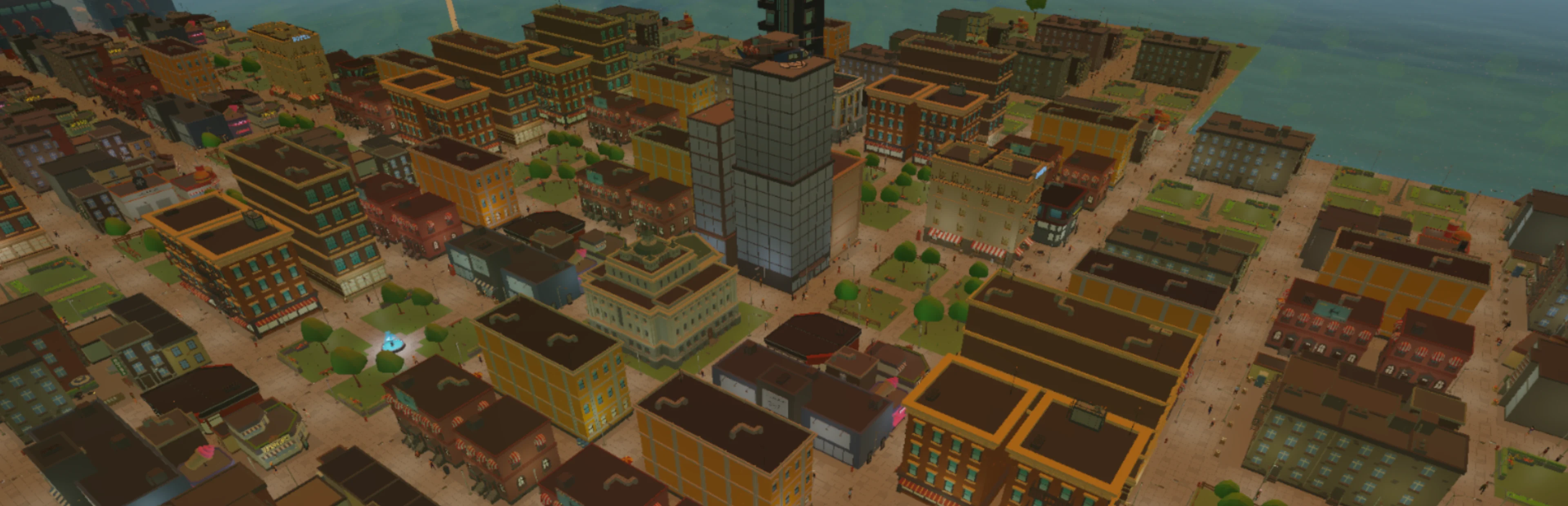
Choose a block, rotate it, and preview how it connects to the surrounding city.
A game by Evion Studios
A cozy spatial-puzzle city builder where each placement shapes what comes next. Place with purpose, create synergies, unlock new building tiers, and raise new land from the water.
Created by Elmer Almer Ershagen and published under Evion Studios.
Status
Unreleased
Current phase
Playtest & polish
Development
Solo developer
Timeline
Jan 2026 – present
Built with
Unity 6 · C#
The game today
A cozy spatial-puzzle city builder where each placement shapes what comes next. Place with purpose, create synergies, unlock new building tiers, and raise new land from the water.
The current city is denser, warmer, and built around visible spatial decisions rather than passive waiting.
The core loop
A simple sequence keeps every system pointed at the same goal: make the next piece of the city more valuable than the last.
Choose a block, rotate it, and preview how it connects to the surrounding city.
Use positive synergies and avoid costly relationships between building types.
Earn points from thoughtful placement and from upgrading strong city blocks.
Meet each tile's city-wide requirements to raise the next piece of land.
Unlock new tiers at the Town Hall and watch the skyline evolve around you.
The real development story
The project became stronger when finished work was treated as evidence, not as something too precious to change.
A self-playtest exposed the difference between functional systems and a compelling loop. That finding triggered the first serious expansion and progression changes.
External feedback made it clear that polish alone would not solve the problem. The launch path paused while the economy, progression, and interface were rebuilt together.
Free placement, passive income, and several point, payout, and requirement models were tested. Ideas that created spam, waiting, or unclear goals were removed quickly.
From prototype to playtest
The most important progress did not come from adding more systems. It came from testing the whole game, admitting when the loop was weak, and rebuilding around better decisions.
January – February 2026
First playable city
The first version established a grid, four district types, upgrades, and directional synergies. It proved that building a city block by block could feel satisfying—but it was still a loose prototype with an economy and interface searching for a clear purpose.
February – early May 2026
An 11-week devlog experiment
A small daily-development rule became an 11-week weekly devlog series. Expansion, atmosphere, pedestrians, saving, menus, and the first Steam presentation arrived quickly. Playtests then exposed the harder truth: the systems worked, but the loop lost its pull too soon.
Late April – May 2026
The playtest that changed the game
A late-April playtest stopped the original launch path. The passive-income-heavy economy encouraged waiting, while land expansion was not creating enough meaningful city-wide decisions. The rework moved primary rewards into placement and upgrades, then turned expansion into a spatial requirement puzzle.
May – June 2026
Clarity became the feature
A newcomer playtest, followed by further test rounds, revealed that controls, point payouts, upgrade paths, and synergy direction were not as obvious as they felt during development. Connection lines, previews, side-panel breakdowns, tutorials, contextual hints, save slots, and better camera controls turned hidden rules into readable decisions.
June 2026 – present
Playtest and polish
A working demo build, refreshed Steam presentation, 30-tile ending sequence, and continuing expansion are now in place. Development is focused on full start-to-finish tests, first-time comprehension, late-game balance, larger-city performance, controls, menus, and the bugs that only appear when every system meets.
Design through evidence
The biggest pivots began with hands-on testing or external feedback—not with a longer feature wishlist.
The original economy could progress while the player waited. The rework made placement and upgrades the primary point rewards, so progress now comes from reading the city.
First-time players missed synergy direction and upgrade effects. Lines, arrows, color, previews, and breakdowns now explain the result before a decision is locked in.
Thirty curated land puzzles shape the first complete city. After the ending reveal, deterministic expansion keeps the sandbox open for players who want to continue.
Under the city
The visible puzzle is supported by data-driven runtime systems and production tools designed for repeated balancing—not just a single handcrafted screenshot.
ScriptableObjects define building tiers, upgrade paths, synergy rules, and authored expansion requirements without hard-coding the campaign.
Spatial caches, custom pedestrian paths, request budgets, and distance-based simulation are used to reduce simulation cost as cities grow.
A campaign-wide balance grid and automatic building LOD generation turn repetitive production work into fast, reviewable workflows.
Current build
The reworked game now has a coherent visual language for placement, upgrades, progression, expansion, and a city that feels alive between decisions.
Building in public
The public devlogs documented the uncomfortable parts as well as the visible wins. This episode captures the playtest that pushed the project toward its current design.
Watch the devlogs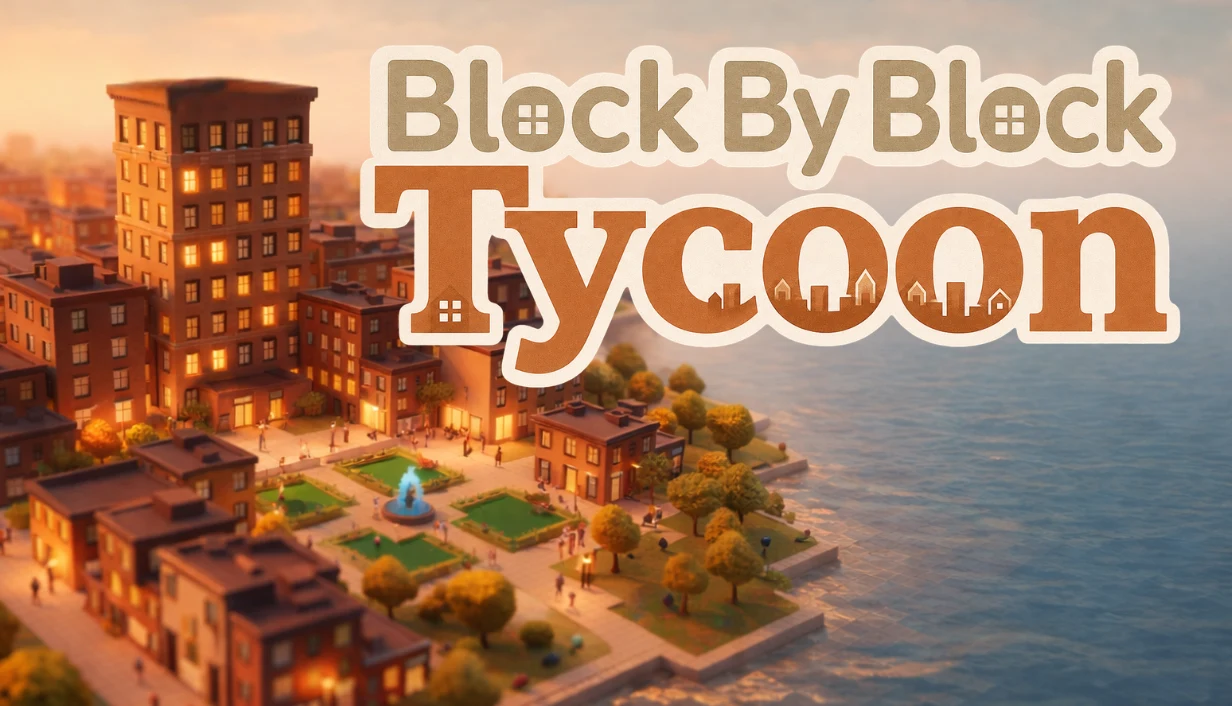
The next block
Block By Block Tycoon is still unreleased. The current goal is not to add everything—it is to make the complete experience clear, balanced, stable, and satisfying from the first block to the campaign city reveal.